Table Of Content
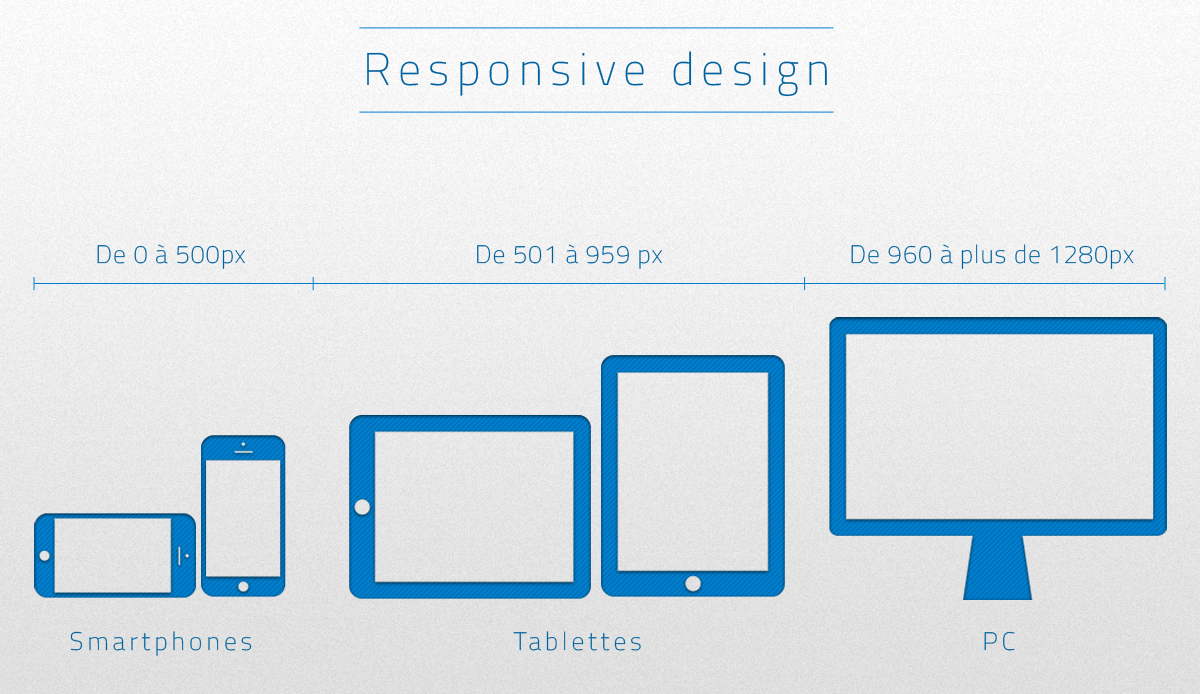
In the “Build Your Portfolio” project, you’ll find a series of practical exercises that will give you first-hand experience with the methods we cover. You will build on your project in each lesson so once you have completed the course you will have a thorough case study for your portfolio. TNW offers helpful considerations regarding Responsive Design, and more advice for attentive designers.
HTML Media
If designers want to prioritize convenience further, they can implement templates from WordPress and include voice-based search features for mobile sites. These details simplify the setup and help customers navigate pages efficiently. Instilling this thoughtfulness into the responsive site creation process allows designers to anticipate user needs and fashion more accessible websites. This means responsive web design is much more flexible and displays the same content across various devices.
CSS Grid
People access the internet from all kinds of devices — be it mobile, laptop, desktop, tablet, or Kindle. Static websites no longer work as they don’t allow users the versatility to change devices and still have an enjoyable user experience. Responsive web design and the methods we've talked about will work when done right, and can make the user experience better. Having said that, there is a need to keep up with new devices, screen sizes, and web technologies to keep improving the user experience.
Responsive Web Design - Introduction
Responsive design is an approach to web design in which the interface adapts to the device's layout, facilitating usability, navigation and information seeking. Responsive web design benefits users, web designers and developers, and businesses. For example, it allows web developers and designers to build a site once for a range of devices rather than building a different version to suit each one.
This would eliminate the need for a different design and development phase for each new gadget in the market. Screen size constantly changes, and it's crucial that your website can adjust to any screen size, both now and in the future. Moreover, devices come with various features (like touchscreens) that users interact with. Modern responsive design takes all these factors into account to enhance the experience for everyone.
Related Responsive Web Design Careers
In the table below, we'll compare programs you can use to create a responsive website without writing any code. You can use this table to compare the cost and features of various software with built-in RWD capabilities. The HTML element allows you to define different images for different browser window sizes.
On wide screens and browsers, all of the content on this simply designed website is well organized into columns, sidebar and simple navigation up top. On smaller screens, the sidebar is the first to drop off, and its content is moved below the book previews and essential information. Whereas on a wider screen we’d look left to right, on a narrower screen we’d tend to look from top to bottom. Content on the right is moved below content that would appear on the left on a wider screen. Eventually, when the horizontal space is fully limited, the navigation is simplified and stacked vertically, and some repeated or inessential elements are removed. This technique is fully supported in modern browsers, such as IE8+, Safari, Chrome and Opera, as well as mobile devices that use these same browsers (iPad, iPhone, etc.).
Jump Start Responsive Web Design, 2nd Edition - SitePoint
Jump Start Responsive Web Design, 2nd Edition.
Posted: Tue, 18 Apr 2017 07:00:00 GMT [source]
In combination with other SEO factors, responsiveness can help give you a big boost in search engine results. The ultimate goal of responsive design is to avoid the unnecessary resizing, scrolling, zooming, or panning that occurs with sites that have not been optimized for different devices. It is often very difficult to navigate these sites, and it may even cost you potential customers who become frustrated with trying to figure out how to do something.
Responsive Web Design – FAQs
What's the difference between responsive, adaptive and mobile-friendly sites? - ClickZ
What's the difference between responsive, adaptive and mobile-friendly sites?.
Posted: Wed, 20 Apr 2016 07:00:00 GMT [source]
This new child style sheet would adopt everything from the default style sheet and then just redefine the layout’s structure. Time to get inspired by websites that have successfully passed the responsive design test. It’s important to learn from the successes and failures of others to cut your losses. Shahzeb currently holds the position of Senior Product Marketing Manager at LambdaTest and brings a wealth of experience spanning over a decade in Quality Engineering, Security, and E-Learning domains. Over the course of his 3-year tenure at LambdaTest, he actively contributes to the review process of blogs, learning hubs, and product updates. However, there are more aspects you should consider while responsive testing.
One may also have to consider the settings on their devices; if they have a VPN for iOS on their iPad, for example, the website should not block the user’s access to the page. In other words, the website should have the technology to automatically respond to the user’s preferences. This would eliminate the need for a different design and development phase for each new gadget on the market. First, here’s a quick explanation of responsive design and how it works.
Responsive web design is a design and UX approach that helps make websites accessible across a range of mediums. Designers can take advantage of Cascading Style Sheets (CSS) media queries, which resize the dimensions and features of site pages. This process allows users to interact with a website on different devices. As a result, people can enjoy a seamless site experience no matter where they’re browsing. When you use fluid grids to define a layout using relative values (such as percentages), nothing on a layout will have a constant size across all devices.
The closer you are to the top, the better the chance potential customers will find you. When determining the orientation for the iPhone and other devices, the use of max-device-width and min-device-width should do the trick. Meet Smashing Workshops on front-end, design & UX, with practical takeaways, live sessions, video recordings and a friendly Q&A. There are a ton of online tools available to quickly check how responsive your website is, and we recommend you take full advantage of them!
Fortunately, making a design work for both doesn’t take a lot of effort. Touchscreens have no capability to display CSS hovers because there is no cursor; once the user touches the screen, they click. So, don’t rely on CSS hovers for link definition; they should be considered an additional feature only for cursor-based devices.
The type of responsive web design services you'll need varies based on the scope of your project. You may hire a freelance web designer specializing in RWD, or retain the help of an agency. Typically, a responsive web design company or agency will offer services ranging from design and development to marketing expertise and strategic recommendations. Be sure to research company reviews and examine their previous work before choosing one. This meta tag exists because when smartphones first arrived, most sites were not mobile optimized. The mobile browser would, therefore, set the viewport width to 980 pixels, render the page at that width, and show the result as a zoomed-out version of the desktop layout.
The content is displayed in one column in the smartphone, two on the tablet and three on the desktop. Organizations and designers found the benefits of responsive design hard to ignore. Rather than work with absolute units (e.g., pixels) on separate versions, designers focused on just one design and let it flow like a liquid to fill all "containers." If you use a default WordPress theme, like Twenty Twenty, the design is responsive, but since it’s a single-column design, you might not realize it when looking at it on different screens.


No comments:
Post a Comment